
Table of Contents
If you are new to online ads, this beginner PPC guide is for you. In this guide, we will explain PPC keyword research for Google Ads in a simple way with clear examples and easy words.
At Digital Advengers, our focus is always on smart and result-driven strategies. In every PPC service, the main goal is to bring the right visitors to your website. With the right keywords in your campaign, you can reach people who are already searching for your service.
Let’s begin with the simple and clear step-by-step.
What Is PPC Keyword Research?
In simple terms, PPC keyword research means finding the right words for your paid ads. In Google Ads campaigns, these words help your ad appear in front of the right audience. When you do keyword research for Google Ads, you don’t guess. Instead, you can plan with data and clear intent.
In every campaign, keywords connect your business with customer searches. With the right keywords, your ad will show at the right time. Without proper research, your budget can be wasted on the wrong clicks. That is why PPC keyword research for Google Ads is the foundation of every successful campaign.
Why Keyword Research Is Important for Google Ads
In digital marketing, visibility is everything. With strong Google Ads keyword research, your business appears in front of people who are ready to buy. At Digital Advengers, our campaigns are built with strategy and data. This careful planning helps every keyword to be selected with purpose.
When you target finding profitable PPC keywords, you need to target keywords that drive conversions, not just visitors. By making the right choices, you can manage your cost per click and improve your return on ad spend. The right keywords give you better leads with less waste.
Understanding Search Intent Before Choosing Keywords
Before you start with tools, you must understand intent. With search intent, you will understand what the user wants behind the search. Some people search for information. Some people search with buying intent. When you have a question – how to choose keywords for Google Ads campaign, you must focus more on buying intent keywords.
For example, a person searching “buy digital marketing service in Dubai” shows clear intent. When people type these words in the search bar, the user is ready to take action. In every PPC campaign keyword research, intent matters more than volume.
Step-by-Step: How to Do PPC Keyword Research
Now, let me explain how to do PPC keyword research in simple steps.
1. Start With Your Service List
First, write down your services. When you have a clear list, you can understand what you are promoting. If you offer SEO, social media marketing, and Google Ads, you start from those terms. This step helps you build your base keywords.
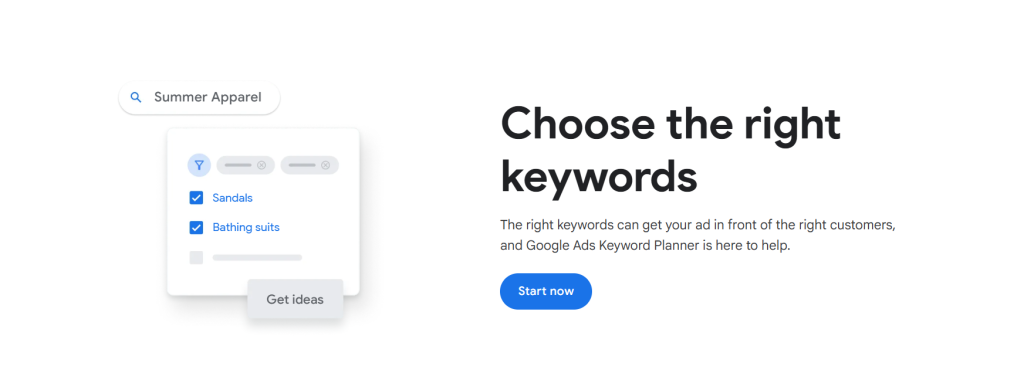
2. Use Google Ads Keyword Planner
Inside Google Ads, there is a free tool for keyword ideas. With this tool, you can explore search terms and get ideas. In this Google Ads keyword planner guide, you can check:
- Search volume
- Competition level
- Suggested bid
With these details, you get a clear direction for your ads.
3. Look for Relevant Variations
With one main keyword, you can find many variations. For example, from “PPC keyword research,” you may find related terms. With these variations, your ad can match more searches. In every Google Ads keyword research, variations help to increase reach.
Finding Profitable and Low Competition Keywords
Now let’s talk about smart selection. In paid ads, high competition often means higher cost. With high competition keywords, your budget may finish quickly. That is why many beginners ask, how to find low competition PPC keywords?
Here is the simple answer:
Check the competition level with the keyword planner. You may get lower costs with medium or low competition. But do not select keywords only because they are cheap. When finding profitable PPC keywords, profit matters more than price. A keyword with strong buying intent and medium competition is often better than a cheap keyword with no intent.
Match Types in Google Ads
In Google Ad, keywords are used to match types. Using match types, you can decide when your ads will be displayed. There are three kinds of match types: broad match, phrase match, and exact match.
- In a broad match, your ad will be displayed for searches that are related to your ad.
- In phrase match, your ad will be displayed for searches that contain your phrase.
- In an exact match, your ad will be displayed for very specific searches.
In smart PPC campaign keyword research, match types are used to control budget and targeting.
Grouping Keywords for Better Campaign Structure
In every campaign, structure is important. By grouping properly, your ads become more relevant. If you combine all keywords in one ad group, your message will be weak. By using focused ad groups, your ads become more relevant to the search.
For instance, group all SEO keywords in one ad group. Group all PPC service keywords in another ad group. By doing so, your quality score will improve. When you improve your quality score, your cost per click will decrease.
Negative Keywords for Budget Protection
In PPC, not every click is useful. With negative keywords, you stop unwanted traffic. For example, if you offer premium services, you may exclude “free” searches. Negative keywords stop your ads from appearing in searches that do not match your offer or target audience. In strong Keyword research for Google Ads, negative keywords are very important. With them, you can protect your budget from waste.
Tracking and Improving Your Keywords
Keyword research is not a one-time task. In live campaigns, you must check performance regularly. In Google Ads, you can see which keywords bring clicks and conversions. With that data, you can pause weak keywords. With strong keywords, you can increase your budget. At Digital Advengers, campaigns are monitored with data and strategy. With regular optimization, performance improves over time.
Common Mistakes Beginners Should Avoid
In this beginner PPC guide, let me share simple mistakes to avoid.
- Do not choose keywords only because of high search volume. With high volume alone, you may get unqualified traffic.
- Do not ignore the competition level. With very high competition, your costs can increase fast.
- Do not skip negative keywords. Without negative keywords, your budget can leak.
- Do not forget to check the results. With regular tracking, your campaign becomes stronger.
Conclusion
If you follow the right strategy, PPC keyword research for Google Ads becomes simple and powerful. By following clear goals, proper tools, and smart analysis, you can build strong campaigns. In every step, focus on intent. In every keyword, think about profit. With structured ad groups, you can improve relevance. But with negative keywords, you reduce waste.
Through consistent Google Ads keyword research, you have to stay ahead of the competition. If you are just starting, take it step by step. With patience and learning, your results will improve. With the right guidance and strategy, your ads can bring real business growth. And with the right partner like Digital Advengers, your campaigns can move in the right direction from day one.


