
Table of Contents
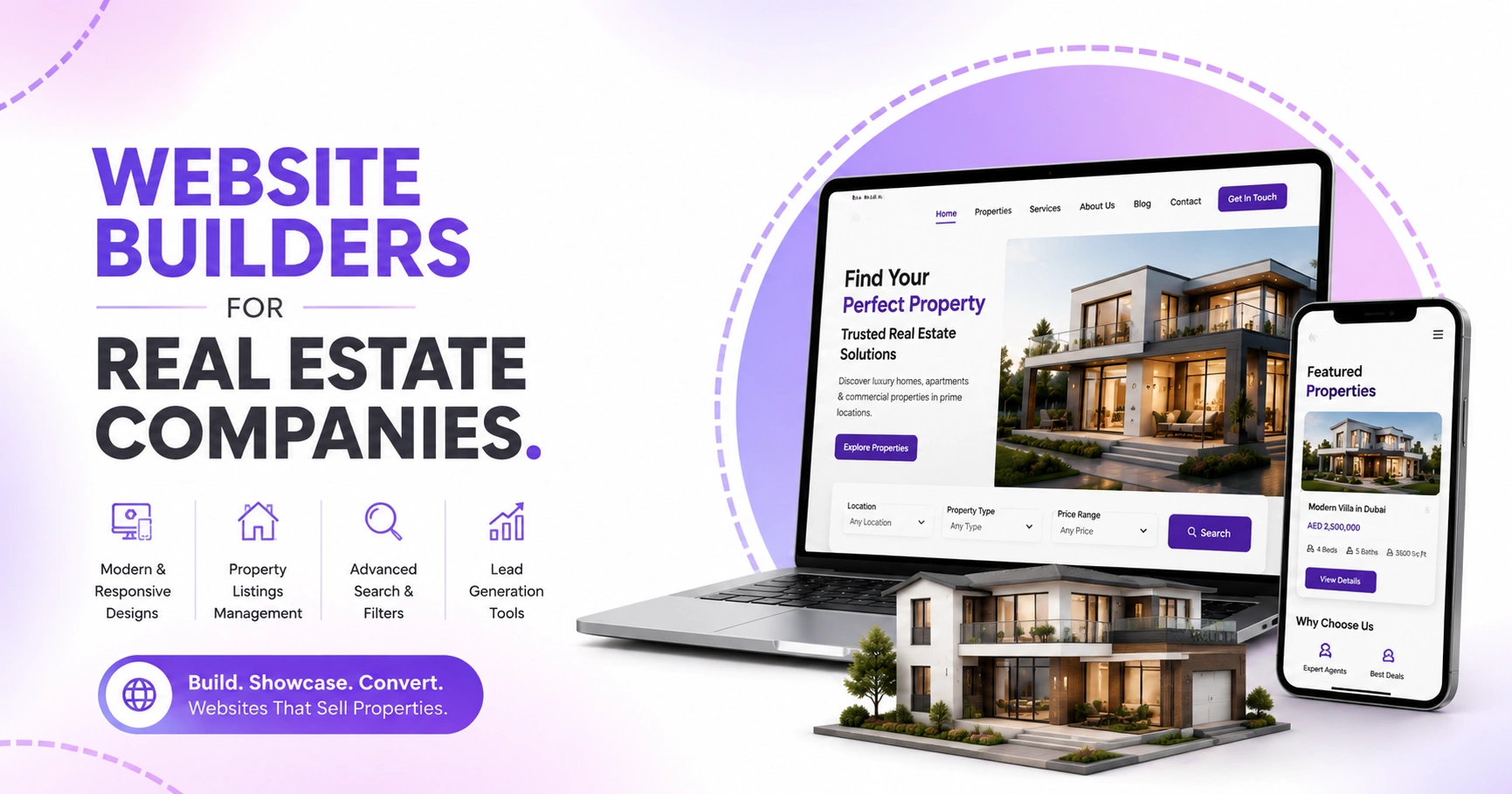
Your website is often the first place a buyer or tenant looks before they ever call you. So a slow, outdated or confusing site can push a serious lead straight to a competitor. This is why so many agencies and independent realtors are searching for the right website builders for real estate that can keep up with how people search for property today.
Not every website builder is built for real estate. Listings need to be searchable, properties need clear photos and details and the site needs to load fast on mobile. Because most buyers now browse on their phones. Below we will talk about what a real estate website actually needs. Lets check out full guide now!
Why Real Estate Websites Need More Than a Template?
A basic template might work fine for a small blog but real estate is different. You are helping someone imagine living in or investing in a space they have never physically visited. That means your real estate web design has to do a lot of heavy lifting.
A strong site should let visitors filter listings by location, price and type without frustration. It should load quickly even with dozens of high resolution images and it should be structured. So search engines can understand it and your listings show up when someone searches for property nearby.
This is where proper real estate website development makes a difference. It is not only about how the site looks but how well it performs when someone is trying to make a decision.
IDX Integration and Why It Matters?
IDX website development is worth understanding if your business deals in listings that update regularly. IDX or Internet Data Exchange pulls live listing data from a shared database. So your customers will always have access to the latest information without having to update all the pages individually. This way helps you save time and still maintain credibility on the website for agencies that own several properties.
A real estate website tends to fall behind fast without IDX or a similar system. Listings go stale, prices stay outdated and visitors lose confidence in the site.
Choosing Between a Ready-Made Builder and a Custom Build
Many businesses start with an easily available builder because it seems faster and cheaper. That can work for a small operation with a handful of listings. But the limitations show up quickly once your portfolio grows or you need to stand out in a crowded market.
This is often where the question of an AI website vs custom real estate website comes up. AI website builders can generate a site in minutes but they usually rely on rigid templates and limited customization.
A custom website for property business needs to give full control over layout and how listings are presented when your brand and inventory keep evolving.
So the answer depends on your scale if you are searching for the best website builder for real estate agents. Solo agents may do fine with a simpler setup. Agencies managing large volumes of property website development work usually benefit more from custom website development built around their exact workflow.
What a Good Real Estate Website Should Include?
A few features separate real estate websites that convert from ones that simply exist online:
- Fast-loading pages with large image galleries
- Mobile-friendly layouts for on-the-go browsing
- Clear property filters for location, budget and type
- Simple inquiry forms on every listing page
- SEO-friendly structure so listings can be found through search
Working with Digital Advengers helps make sure none of these pieces are missing. Since each one plays a role in whether a visitor stays or leaves within seconds.
Realtor Website Design That Builds Trust
Realtor website design shapes how much a visitor trusts your business beyond functionality. Clean typography, professional photography and an organized layout all signal a serious operation. A cluttered or dated design with great listings behind it can quietly push clients away before they browse a single property.
Conclusion
There is no single formula that works for every business. Some agencies benefit from a quick AI generated site to get started. Others need a tailored platform built around IDX integration and a brand identity that stands out. So understanding your own scale and goals before picking website builders for real estate matters most.
If you are still weighing your options, it helps to speak with people who build these sites for a living. Contact our experts now to talk through what your business needs.
FAQs
1. Do I need a custom website or is a template builder enough?
It depends on your listing volume and growth plans. A template can work for a small operation but a custom build handles scale and branding better over time.
2. What is IDX and do I really need it?
IDX pulls live property data into your website automatically to save you from manually updating pages and keeping information accurate for visitors.
3. Why does mobile design matter so much for real estate sites?
Most property searches start on a phone. If your site is slow or hard to navigate on mobile, visitors are likely to leave before viewing a listing.
4. Can AI website builders handle real estate listings well?
They handle basic setups fine but often struggle with heavy customization and the large-scale IDX integration that growing agencies need.
5. How long does it take to build a proper real estate website?
Timelines vary by features and listing volume but a well-planned custom build typically takes several weeks from strategy through launch.


